
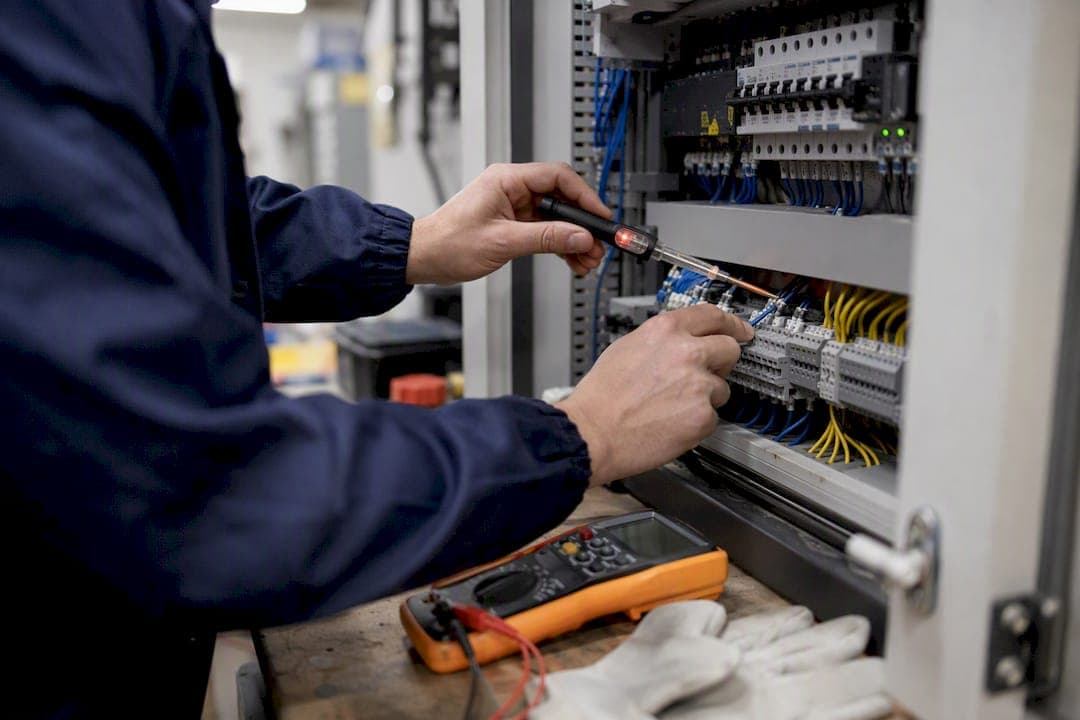
An OT asset inventory is an organized, continuously updated record of every piece of operational technology hardware, software, and network connection running in your industrial environment. If you don't have one today, the first move isn't buying a tool. It's assigning an owner and defining scope: which facilities, which systems, which boundaries count.
That approach mirrors the joint federal guidance released by CISA and its partner agencies, which frames asset inventory as the foundation of OT cybersecurity rather than a compliance checkbox. The NSA publicly backed this guidance, and it aligns with ISA/IEC 62443 taxonomy concepts and NIST's Cybersecurity Framework identification function. This article walks through that stepwise process, the fields worth capturing, and the operational habits that keep an inventory from going stale six months after you build it.
Key Takeaways
A defensible OT asset inventory requires a defined scope, CISA-aligned attribute collection, a criticality-based taxonomy, and lifecycle policies that survive emergency changes.
| Point | Details |
|---|---|
| Start with ownership and scope | Assign a single owner and define asset boundaries before collecting any data. |
| Capture high-priority fields first | Prioritize hostname, IP/MAC, criticality, and lifecycle status when resources are limited. |
| Combine discovery methods | Blend passive monitoring, manual walkdowns, and cautious active scanning for full coverage. |
| Update cadence must match criticality | Automate checks for high-criticality assets; review noncritical assets quarterly or annually. |
| Symmnet offers continuous inventory support | Symmnet's managed assessment and 24/7 monitoring keep OT inventories current without pulling staff off production. |
Table of Contents
- Why an OT Asset Inventory Matters More Than You Think
- Core Fields Every OT Asset Record Should Capture
- How to Build an OT Asset Inventory Step by Step
- Choosing Discovery Methods Without Disrupting Operations
- Keeping the Inventory Accurate Over Time
- Common Roadblocks and How to Work Around Them
- Putting the Inventory to Work in Security Operations
- Planning Your Inventory Project: Timeline and Effort
- How a Managed Provider Approaches This Work
- Connecting OT Inventory Data to Enterprise Asset Systems
- Verifying Accuracy Through Regular Audits
- Documenting Temporary and Mobile OT Assets
- What I've Seen Go Wrong, and Where to Start Instead
- Let Symmnet Handle the Inventory While You Run the Plant
- Primary Sources for OT Asset Inventory Guidance
- Frequently Asked Questions
- Sources
Why an OT Asset Inventory Matters More Than You Think
Most plant managers already believe they know what equipment runs their facility. They usually don't, not completely. A programmable logic controller installed by a contractor five years ago, a legacy HMI nobody documented, a temporary sensor from a commissioning project that never got removed from the network. These gaps are exactly what an accurate inventory closes.

An up-to-date inventory reduces cyber risk because you can't defend, patch, or segment what you don't know exists. It improves safety and reliability because maintenance teams can plan work around verified equipment lists instead of guesswork. It supports compliance because auditors and regulators increasingly expect documented evidence of what's connected to your control systems, not verbal assurances.
The direct payoffs show up across several functions:
- Vulnerability triage: you can immediately tell whether a newly disclosed CVE applies to your environment instead of scrambling to check every device.
- Segmentation planning: you know which assets belong in which network zone before you draw the architecture.
- Faster incident response: responders know what's supposed to be on the network, which shortens the time to spot what isn't.
- Maintenance efficiency: technicians stop hunting for model numbers and firmware versions during outages.
- Regulatory evidence: you have a defensible record when an auditor or insurer asks for proof.
Consider a common scenario: a vulnerability scanner flags a critical exposure tied to a specific controller model. Without an inventory, security teams often escalate broadly, pulling maintenance staff into an emergency response for equipment that may not even be present. With an accurate inventory, that same alert gets resolved in minutes because you can confirm exactly which units are affected and where they sit.
Core Fields Every OT Asset Record Should Capture
The value of an inventory lives in its fields, not its existence. A spreadsheet with facility names and nothing else isn't an inventory; it's a directory. The joint CISA guidance lists specific high-priority attributes that separate a usable record from a decorative one.
| Field | Why It Matters |
|---|---|
| Hostname / device name | Identifies the asset consistently across systems and reports. |
| IP address | Enables network mapping, segmentation, and traffic correlation. |
| MAC address | Provides a stable identifier even when IPs change via DHCP. |
| Manufacturer and model | Ties the device to known vulnerabilities and vendor advisories. |
| Operating system / firmware version | Determines patch applicability and end-of-life exposure. |
| Open ports and services | Reveals attack surface and unnecessary exposure. |
| Communication protocols | Flags legacy or unencrypted protocols needing compensating controls. |
| Asset criticality | Drives prioritization for patching, monitoring, and response. |
| Physical location | Speeds field verification and physical security response. |
| Lifecycle status | Flags whether a device is active, supported, or end-of-life. |
Beyond the raw fields, metadata that ties an asset to its broader context multiplies the inventory's usefulness. Criticality rankings matter less in isolation than when linked to the system or process the asset supports. A pump controller might look unremarkable on its own, but if it's tied to a safety interlock on a high-pressure line, that association changes every decision made about it. Network exposure notes (is this device reachable from the corporate network, from the internet, from a vendor VPN) turn a static record into a risk map.
Lifecycle status deserves particular attention. CISA's guidance flags it as a high-priority field precisely because end-of-life devices create compounding risk: no more patches, shrinking vendor support, and often no clear replacement plan until something breaks.
Pro Tip: If your team is resource constrained, don't try to capture all ten fields for every asset on day one. Start with hostname, IP/MAC, criticality, and lifecycle status for your highest-risk zones, then expand the schema outward. CISA's Appendix A is written with exactly this kind of phased prioritization in mind.
How to Build an OT Asset Inventory Step by Step
Trying to inventory an entire plant in one sweep is how these projects stall. The CISA-recommended approach breaks the work into five phases, each with a clear deliverable and a logical owner. Treat this as a project plan, not a philosophy.
1. Define scope and governance. Decide what counts as an OT asset before you inventory anything. Does a building automation controller count? What about a vendor's laptop that connects during commissioning? Set the boundary in writing.
- Deliverable: a scope document defining included systems, facilities, and network boundaries.
- Owner: OT security lead or plant engineering manager, with sign-off from operations leadership.
2. Identify assets. Walk the environment, physically and digitally, following best practices to optimize production and design for manufacture. This phase combines network discovery with boots-on-the-ground verification, especially for legacy or air-gapped equipment that won't show up on any scan.
- Deliverable: a raw asset list, even if incomplete, covering every zone in scope.
- Owner: a joint team of OT engineers and IT/security staff, because neither group alone typically has full visibility.
3. Collect attributes. For every asset identified, populate the core fields: hostname, IP/MAC, manufacturer, protocols, criticality, location, and lifecycle status. This is the most labor-intensive phase and where most programs underinvest.
- Deliverable: a populated asset database or CMDB entry per device.
- Owner: field technicians for physical data, network/security staff for connectivity data.
4. Create a taxonomy. Classify assets by function and criticality, then align the structure to ISA/IEC 62443 Zones and Conduits concepts so your taxonomy maps cleanly to segmentation and control planning.
- Deliverable: a taxonomy document defining zones, asset classes, and criticality tiers.
- Owner: OT security architect, reviewed by operations and compliance stakeholders.
5. Manage data and implement lifecycle management. Set the cadence, ownership, and change-control rules that keep the inventory current after the initial build.
- Deliverable: a documented update process with defined roles and SLAs.
- Owner: whoever owns ongoing OT security operations, whether internal or a managed provider.
Here's a simplified taxonomy snippet showing how function and criticality intersect with a Zones and Conduits structure:
Zone: Process Control Zone A (Line 3 Bottling)
  Function: Motor control and PLC logic
  Criticality: High (production stoppage risk)
  Conduit: Firewall-segmented link to SCADA historian
  Assets: PLC-3A-01, HMI-3A-02, VFD-3A-03

Zone: Building Automation
  Function: HVAC and environmental control
  Criticality: Low (no direct production impact)
  Conduit: Isolated VLAN, no external routing
  Assets: BAS-CTRL-01, BAS-SENSOR-04
Notice that criticality doesn't track with technical sophistication. A simple environmental sensor might be low-priority, while an aging VFD tied to a bottling line is high-priority precisely because of what happens if it fails, not how advanced it is.
Governance decisions belong at the start of this process, not in the middle of it. Before your team collects a single attribute, agree on what counts as an asset in scope (does a temporary vendor laptop count? A network switch?), where the physical and logical boundaries sit, and who has final authority to approve additions or removals from the record. Skipping this step is the single most common reason inventories balloon into unmanageable, inconsistent lists.
Choosing Discovery Methods Without Disrupting Operations
No single discovery method captures everything in an OT environment, and the methods that work well in IT can actively harm OT reliability if applied carelessly.
- Passive discovery (network sniffing): monitors traffic without sending packets, making it the safest default for sensitive control networks; it infers device characteristics from what it observes rather than querying devices directly.
- Active scanning: sends queries to devices to pull detailed information, which works well in modern, resilient networks but carries real risk with legacy PLCs and RTUs that weren't built to handle unexpected traffic.
- Deep packet inspection (DPI): examines protocol-level payloads to identify device types, firmware versions, and communication patterns with more precision than basic traffic sniffing.
- Agent-based collection: installs lightweight software on assets that support it, useful for modern Windows-based HMIs and engineering workstations but rarely viable on embedded controllers.
- Manual and field inspection: physical walkdowns with a clipboard or tablet remain the only reliable method for air-gapped equipment and devices with no network presence at all.
A practical architecture blends these: passive sensors feed continuous data into a central asset database or CMDB, manual walkdown data fills gaps for isolated equipment, and periodic active scans (scheduled during planned downtime) validate details passive monitoring can't capture. Practitioner guidance from SEI/CMU is blunt about the limits of manual tracking alone: a spreadsheet doesn't scale past a handful of assets, and it certainly doesn't stay current without a system of record behind it.
Pro Tip: Never run active scans against production OT equipment without change-control approval and a scheduled maintenance window. For anything air-gapped or running proprietary protocols you don't fully understand, default to passive discovery plus manual intake rather than risk an unplanned outage over an inventory field.
Keeping the Inventory Accurate Over Time
An inventory built once and never touched again decays fast, usually within months. Lifecycle management is the discipline that keeps it defensible.
Every asset moves through predictable stages, and each stage demands an inventory action:
- Acquisition: log the device in the inventory before it ever touches the network, capturing manufacturer, model, and intended criticality tier.
- Commissioning: verify and finalize network attributes (IP, MAC, protocols) once the asset is live.
- Maintenance: update firmware version and lifecycle status whenever patches or upgrades occur.
- Decommissioning: remove or archive the record, and confirm the device is physically and logically disconnected.
Update frequency should be determined by asset criticality, with more frequent checks for higher-criticality assets and less frequent periodic reviews for others to manage risk effectively.
The change-control clause that trips up most programs: emergency changes still require inventory updates. When a controller fails at 2 a.m. and gets swapped under emergency authority, the temptation is to fix the record "later." Later rarely comes. Building the inventory update into the emergency change process itself, not as an afterthought, is what keeps the record trustworthy.
Common Roadblocks and How to Work Around Them
Every OT inventory project runs into the same handful of obstacles. Recognizing them early saves months of frustration.
- Stale, static lists: an inventory built once during a compliance push and never revisited becomes fiction within a year.
- Spreadsheet limits: manual tracking works for a single line but collapses under the complexity of a multi-facility environment.
- Incomplete documentation: legacy devices installed decades ago often have no surviving manuals or network diagrams.
- OT/IT coordination gaps: IT teams default to scanning approaches that OT engineers rightly distrust for safety reasons.
- Scanning risk on fragile equipment: older PLCs and RTUs can crash or misbehave under active probing.
The fix isn't a single tool. It's combining passive monitoring for continuous visibility, scheduled physical walkdowns for equipment that never touches the network, vendor and maintenance documentation for historical gaps, and clearly assigned roles so someone actually owns data validation instead of everyone assuming someone else does.
Pro Tip: Don't try to inventory everything at once. Start with your highest-criticality systems, the ones tied to safety, production continuity, or regulatory scope, and expand outward in waves. A complete inventory of your least important assets helps you less than a partial inventory of your most important ones.
Putting the Inventory to Work in Security Operations
An inventory that just sits in a database isn't earning its keep. Its real value shows up the moment something goes wrong.
Picture this: a vulnerability scanner flags a critical remote-code-execution flaw in a specific firmware version. Without an inventory, the response is guesswork: pull every device of that manufacturer offline and hope you caught them all. With an accurate inventory, you query the record, identify the exact units running that firmware, check their criticality tier, and schedule remediation during planned downtime instead of an emergency shutdown.
That single capability, precise triage instead of broad panic, is what justifies the entire inventory effort to skeptical stakeholders.
The inventory feeds directly into several downstream systems and processes:
- Vulnerability scanners: cross-reference CVEs against actual installed hardware and firmware rather than assumptions.
- SIEM platforms: enrich security alerts with asset context (criticality, location, owner) instead of raw IP addresses.
- CMMS/CMDB systems: sync maintenance schedules with lifecycle status and criticality tiers.
- Patch tracking: identify exactly which devices need a given update and which are incompatible.
- Segmentation planning: use taxonomy and Zones and Conduits data to design network boundaries around actual risk rather than guesswork.
Taxonomy and criticality fields do double duty during incident response. When an alert fires, responders can immediately filter by criticality to know whether they're looking at a production-stopping event or a low-risk anomaly on an isolated sensor. That filtering is what cuts false-positive escalations, the single biggest time drain security teams report during OT incidents.
Planning Your Inventory Project: Timeline and Effort
A realistic project moves through pilot, expansion, and steady-state operation, not a single big-bang rollout.
- Weeks 1 to 2: Scope and governance. Define boundaries, assign ownership, and pick a pilot area, typically one production line or facility.
- Weeks 3 to 6: Discovery and field validation. Deploy passive sensors where feasible, conduct manual walkdowns for isolated equipment, and pull vendor documentation for legacy assets.
- Weeks 7 to 9: Attribute collection and taxonomy build. Populate core fields and structure the classification scheme aligned to Zones and Conduits.
- Weeks 10 to 12: Validation and tooling integration. Cross-check the inventory against network traffic, connect it to your CMDB or vulnerability management platform, and fix discrepancies.
- Month 4 onward: Expand and operate. Roll the process out to additional facilities in waves, with the lifecycle management cadence already running.
Effort scales with facility complexity more than headcount. A small operator, as EPA's case study of a wastewater system demonstrates, can build functional inventory and cybersecurity practices without a large internal team. The decision point for most small and mid-sized operators is whether to run this in-house or bring in a managed provider. In-house works when you already have dedicated OT security staff. A managed provider usually makes sense when the team doing this work would otherwise be pulled off production support to handle it.
How a Managed Provider Approaches This Work
A structured OT inventory engagement typically follows four phases: an initial assessment to establish scope and baseline visibility, discovery combining passive monitoring with field verification, taxonomy development aligned to criticality and Zones and Conduits, and ongoing monitoring with scheduled reporting.
What should come out of that engagement are concrete artifacts, not a verbal summary. Expect an asset database populated with the core fields, a written taxonomy document, a defined SLA for update cadence by criticality tier, and an executive report translating technical findings into business risk terms leadership can act on.
If you're evaluating a prospective provider, a few questions separate serious partners from sales pitches:
- What's your coverage model for air-gapped or legacy equipment that can't be scanned?
- What SLA do you commit to for inventory updates on critical versus noncritical assets?
- How often will we receive reporting, and in what format?
- What's your track record with proprietary industrial protocols specific to our sector?
Pro Tip: Ask any prospective provider to walk through how they'd handle a device with no network presence and no surviving documentation. Their answer tells you more about their real-world experience than any sales deck will.
Connecting OT Inventory Data to Enterprise Asset Systems
An OT asset inventory that lives in isolation from the rest of your asset management ecosystem duplicates work and creates conflicting records. The goal is a single source of truth that both operations and IT teams trust, not two competing spreadsheets that drift apart within a quarter.
Enterprise Asset Management (EAM) platforms and IT asset management (ITAM) systems typically track financial, maintenance, and lifecycle data across the entire organization, often with far more mature workflows than most OT environments have built. Rather than replacing those systems, a well-designed OT inventory feeds into them. Criticality tiers and lifecycle status flow from the OT record into EAM maintenance scheduling. Network exposure and protocol data flow into ITAM and security tooling that governs patch management across the whole enterprise.
The practical friction point is usually data model mismatch. EAM systems built for facilities and rotating equipment don't naturally accommodate fields like open ports or communication protocols. IT-focused ITAM platforms often can't represent physical location context the way OT teams need. Bridging that gap usually means either extending your existing EAM/ITAM schema with OT-specific fields or maintaining a dedicated OT asset database that syncs key fields (criticality, lifecycle status, location) bidirectionally with the enterprise system.
Whichever route you take, resist the temptation to let IT's asset management approach simply absorb OT without adaptation. The coordination gap between IT and OT teams is a well-documented failure point, and forcing OT data into an IT-shaped schema tends to strip out exactly the operational context that makes the inventory useful on the plant floor.
Verifying Accuracy Through Regular Audits
An inventory is only as trustworthy as its last verification. Treating the initial build as a one-time project is the single fastest way to end up with a record that looks complete but quietly diverges from reality.
Accuracy validation works best as a layered process rather than a single annual audit. Passive network monitoring provides continuous, low-effort cross-checking: if a device appears on the network but not in the inventory, that's an automatic flag. Scheduled physical walkdowns, ideally tied to existing maintenance rounds rather than a separate initiative, catch the air-gapped and isolated equipment that passive monitoring can't see. Periodic reconciliation against vendor invoices and procurement records catches assets that were purchased and installed but never formally logged.
The audit cadence should track criticality, the same principle that governs update frequency. High-criticality zones justify quarterly formal audits with documented sign-off. Lower-criticality areas can run on an annual cycle without materially increasing risk exposure.
Discrepancies found during an audit deserve a documented resolution path, not a quiet correction. Was the device missing because of a process failure (someone forgot to log a change) or a process gap (there's no clear owner for that asset class)? The first is a training issue; the second is a governance issue, and it usually points to a weakness in the scope and ownership decisions made at the very start of the project.
Documenting Temporary and Mobile OT Assets
Temporary and mobile assets are where most inventories quietly fail, precisely because they don't fit the mental model of a bolted-down PLC on a production line. Vendor laptops connected during commissioning, portable diagnostic tools, rental generators with embedded controllers, and temporary sensors deployed for a specific project all touch the OT network, sometimes for weeks, sometimes for a single afternoon.

The instinct is to skip documenting these because they're temporary anyway. That instinct is exactly backward. A vendor laptop connected for three days during a system upgrade represents a real, if brief, attack surface and a real entry in the change-control record. If it's not logged, nobody notices when it should have been disconnected, and nobody can rule it out later if something goes wrong during that window.
A workable approach treats temporary assets as a distinct category within the same taxonomy, tagged with an expected connection window and a mandatory removal date. Assign a specific owner, usually whoever authorized the vendor or contractor access, responsible for confirming disconnection and updating the inventory the moment the work concludes. Mobile OT assets that move between facilities (portable HMIs, diagnostic laptops, calibration equipment) need a "current location" field that actually gets updated, not a static entry that becomes fiction the first time the device travels.
The discipline here is small but consequential: treat temporary access as a scheduled event with a start and end date in the record, not an exception to the inventory process.
What I've Seen Go Wrong, and Where to Start Instead
The programs that stall usually fail at scope, not execution. Teams try to inventory an entire enterprise at once, run out of momentum by month three, and end up with a half-finished record that nobody trusts enough to use.
Start smaller than feels comfortable: one facility, or even one production line, including both network-connected and field devices. Measure success by asset coverage percentage, whether every critical asset in that line got captured, and how consistently the team hits its own update SLA over the following ninety days. A pilot that hits those marks earns the budget for expansion; one that doesn't tells you exactly where the process needs fixing before you scale it.
Let Symmnet Handle the Inventory While You Run the Plant
Building and maintaining a defensible OT asset inventory takes ongoing attention that most internal teams can't sustain alongside daily production demands. Symmnet runs this as a continuous service rather than a one-time project: 24/7 monitoring feeds real-time updates into your asset record, so the inventory reflects what's actually on your network instead of what it looked like at last year's audit.
A free assessment from Symmnet identifies the gaps in your current OT visibility, recommends a pilot scope sized to your facility, and outlines the specific next steps to close those gaps without disrupting production. For manufacturers, aerospace suppliers, and other regulated operators who need a documented, auditable inventory but don't have a dedicated OT security team, that assessment is the fastest path to knowing exactly where you stand. Combine it with Symmnet's network segmentation guidance and you have both the visibility and the architecture to act on it. Request your free security assessment and get a clear picture of your OT environment before your next audit or incident forces the issue.
Primary Sources for OT Asset Inventory Guidance
- Foundations for OT Cybersecurity: Asset Inventory Guidance for Owners and Operators — primary methodology
- CISA and Partners Release Asset Inventory Guidance — advisory context
- NSA Joins CISA and Others to Share OT Asset Inventory Guidance — cross-agency backing
- NIST Cybersecurity Framework — complementary risk-management mapping
Frequently Asked Questions
What is the difference between an OT asset inventory and an IT asset inventory? An OT asset inventory tracks industrial control systems, sensors, and field devices with attributes like protocols and physical location, while IT inventories focus on computing assets and software licenses. The two overlap where OT devices connect to enterprise networks.
How often should an OT asset inventory be updated? Update frequency should scale with criticality. High-criticality assets warrant near-continuous passive monitoring with monthly manual checks, while lower-criticality equipment can run on a quarterly or annual review cycle.
Can I build an OT asset inventory with just a spreadsheet? A spreadsheet can work for a single small line, but it breaks down quickly across multiple facilities or hundreds of assets. Most practitioner guidance recommends a dedicated asset database or CMDB once complexity grows beyond a handful of devices.
What's the safest way to discover assets on legacy or air-gapped equipment? Passive monitoring combined with scheduled physical walkdowns is the safest approach for legacy and air-gapped devices, since active scanning can disrupt equipment that wasn't designed to handle unexpected network traffic.
Does an OT asset inventory help with compliance, not just security? Yes. A documented, regularly updated inventory gives auditors and regulators concrete evidence of what systems exist and how they're managed, which supports compliance efforts tied to frameworks like NIST's Cybersecurity Framework and industry-specific regulations.
Sources
- Foundations for OT Cybersecurity: Asset Inventory Guidance for Owners and Operators
- CISA and Partners Release Asset Inventory Guidance for Operational Technology Owners and Operators
- NSA Joins CISA and Others to Share OT Asset Inventory Guidance
- NIST Cybersecurity Framework