

SCADA security protects the systems that control physical processes, from factory floors to water treatment plants. For anyone new to the field, the priority is simple: availability and safety come before confidentiality, unlike in traditional IT. The practical starting point is layered defenses and risk-based changes, not sweeping fixes applied all at once.
TL;DR:
- Most SCADA devices run legacy protocols that lack authentication and encryption, so network segmentation and monitoring are essential to prevent unauthorized commands.
- Asset inventory is the first step to security because it reveals all devices, including forgotten ones, that could be exploited by attackers.
- Physical security controls and physical access logs are critical because direct access to control cabinets or devices bypasses cybersecurity measures.
- Small facilities should begin with basic segmentation, unique credentials, and passive traffic monitoring before expanding their security architecture.
- Regular patch testing, layered defenses, and coordinated IT-OT efforts are necessary to reduce risks effectively without requiring large budgets.
Table of Contents
- What Are SCADA Systems and Why Does Security Matter?
- What Are the Core Components of a SCADA System?
- What Threats and Vulnerabilities Commonly Affect SCADA?
- What Are the Core SCADA Security Controls You Need?
- How Do IT and OT Security Priorities Differ?
- What Should Small Teams Do First?
- Where Can You Learn More About SCADA Security?
- Why Does Physical Security Still Matter in SCADA Environments?
- What Regulations and Standards Apply to SCADA Security?
- How Do Secure Communication Protocols Work in SCADA?
- How Should You Handle Secure Remote Access and VPNs?
- An Editorial Take: Getting the Basics Right Beats Chasing Perfection
- How Symmnet Helps Small Businesses Secure OT Environments
- Sources
What Are SCADA Systems and Why Does Security Matter?
SCADA stands for supervisory control and data acquisition, and it's the technology behind the scenes at power plants, water utilities, oil and gas facilities, transportation networks, and manufacturing lines. These systems don't just process data. They open valves, run pumps, adjust pressure, and stop conveyor belts. When something goes wrong in SCADA, the consequences show up in the physical world, not just on a screen.
The basic workflow is straightforward once you see it laid out: a control center sends instructions and receives status updates from field devices scattered across a plant or a region, all connected through a mix of wired and wireless communications. Operators watch dashboards, adjust setpoints, and respond to alarms in real time. Field equipment executes those commands on physical machinery.
This is why an outage or a manipulated command carries more weight in SCADA than a typical office IT failure. A ransomware attack on a corporate email server is disruptive. The same attack against a water treatment SCADA network can mean contaminated water, unsafe pressure levels, or a shutdown that takes days to safely restart. NIST SP 800-82 treats SCADA security as a specialized subset of operational technology (OT) security precisely because of this physical dimension, and it's the baseline reference most serious OT security programs build from.
A few sectors depend on SCADA more than most people realize:
- Electric utilities, for grid balancing and substation control
- Water and wastewater treatment, for chemical dosing and flow regulation
- Oil and gas, for pipeline monitoring and refinery process control
- Transportation, for rail signaling and traffic management systems
- Manufacturing, for production line automation and quality control
Small and mid-sized manufacturers often assume SCADA risk is someone else's problem, reserved for utilities and critical infrastructure operators. That assumption doesn't hold up. Any facility running programmable automation on its floor has an OT environment worth protecting.
What Are the Core Components of a SCADA System?
Before you can secure anything, you need to know what you're looking at. SCADA architecture has a fairly consistent set of building blocks, even though the vendors and protocols vary widely from plant to plant.
- MTU / SCADA server: the master terminal unit that aggregates data and issues commands to the field.
- HMI (human machine interface): the screen operators use to monitor and control processes.
- PLC (programmable logic controller) / RTU (remote terminal unit): the devices that directly control physical equipment like motors, valves, and sensors.
- IEDs (intelligent electronic devices): smart sensors and protection relays common in power systems.
- Historians: databases that log process data over time for analysis and compliance reporting.
- Engineering workstations: used to program and configure PLCs and RTUs, often the most sensitive machines on the network.
Communication between these components typically runs over protocols like Modbus, DNP3, or OPC. These protocols were designed decades ago for reliability on isolated networks, not for security. Most lack built-in authentication or encryption, which means a device that can talk to the network can often send commands to it, no credentials required.
A typical topology separates the environment into layers: the control center sits at the top, connected through WAN or field links to remote sites, with an industrial DMZ acting as a buffer zone between the corporate IT network and the OT floor. That DMZ is where historians, patch servers, and remote access gateways usually live, keeping direct traffic from crossing straight into the control network.
Mapping these components in your own environment is the single most useful exercise for a beginner. You can't defend what you haven't inventoried.
What Threats and Vulnerabilities Commonly Affect SCADA?
Cyber threats in SCADA come from a wider range of sources than most newcomers expect. Understanding SCADA threats starts with knowing who's behind them and why.
- Nation-state actors targeting critical infrastructure for espionage or as a strategic capability held in reserve.
- Ransomware operators who don't necessarily understand OT but encrypt whatever they can reach, including engineering workstations and historians.
- Insiders, whether disgruntled employees or contractors with legitimate access who misuse it.
- Opportunistic scanners that find internet-exposed control systems through search tools like Shodan and probe them without a specific target in mind.
- Supply chain compromises, where a trusted vendor's software update or remote access tool becomes the entry point.
The concrete attack paths tend to repeat across incidents: remote access connections left open without multi-factor authentication, default or shared credentials on PLCs and HMIs, insecure legacy protocols that accept unauthenticated commands, and third-party vendor connections that bypass segmentation entirely. Attackers rarely need custom malware when a VPN with a reused password gets them straight into the control network.
Statistic Callout: OT security frameworks including NIST SP 800-82 point to a common thread across major SCADA incidents: layered architecture and segmentation are consistently the controls that were missing or misconfigured when attackers moved from IT networks into OT environments.
Legacy equipment makes all of this worse. Many PLCs and RTUs installed 15 or 20 years ago are still running because they still work, and replacing them means a costly outage. These devices frequently can't be patched, can't run modern authentication, and were never designed with today's threat landscape in mind. That doesn't mean they're indefensible, but it does mean the security burden shifts to the network around them: segmentation, monitoring, and access control have to compensate for what the device itself can't do.
What Are the Core SCADA Security Controls You Need?
Defense-in-depth means no single control is your only line of defense. If one layer fails, the next one should catch it. For SCADA environments, this concept centers on zones and conduits, a model where you group assets by risk and function into zones, then tightly control the conduits (connections) between them. An industrial DMZ is the most common example: a buffer network that separates the business IT side from the control network, so a compromised laptop in accounting never has a direct path to a PLC.
Network segmentation and boundary controls
Segmentation is the foundation everything else builds on. Break the OT network into zones based on function and criticality, then enforce those boundaries with OT-aware firewalls that understand industrial protocols like Modbus and DNP3, not just generic IT firewall rules. In higher-risk environments, unidirectional gateways, hardware that physically allows data to flow only one direction, can protect the most sensitive control zones from any inbound traffic at all.
Access control that fits OT realities
- Apply least privilege: operators get access to what they need to run their shift, nothing more.
- Keep OT credentials separate from corporate IT accounts entirely.
- Require multi-factor authentication wherever the underlying equipment supports it.
- Control and log every remote access session into the OT environment, including vendor connections.
Device hardening and inventory
You can't secure a device you don't know exists. Build and maintain an asset inventory covering every PLC, RTU, HMI, and engineering workstation on the network. Disable unused services and ports on each device, and establish a tested patch process rather than pushing updates blindly, since a botched patch on a live control system can cause more damage than the vulnerability it was meant to fix.
Monitoring built for industrial processes
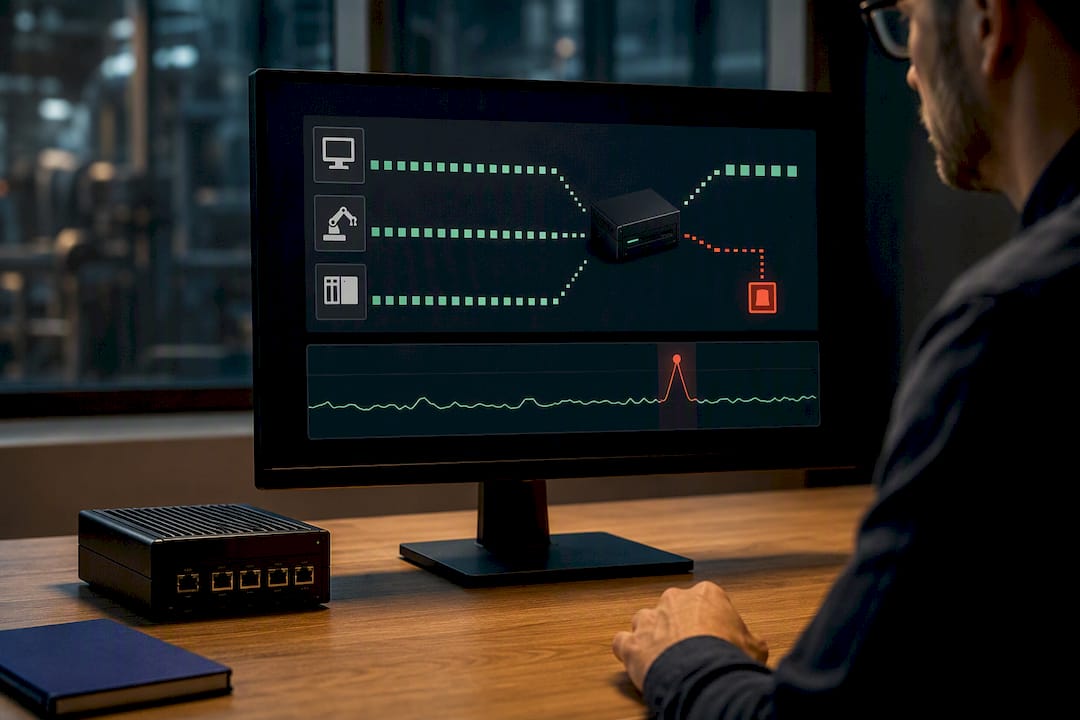
Passive OT intrusion detection systems (IDS) watch network traffic without injecting anything into it, which matters because active scanning can destabilize sensitive equipment. Time-series baselining takes this further: because industrial processes behave predictably, tracking sensor readings and protocol patterns over time makes it possible to flag subtle deviations that indicate a fault or an intrusion attempt, according to InfluxData's SCADA security guide.
Incident response built around safety
An OT incident response plan has to put safety first, sometimes ahead of forensic evidence collection. If isolating a compromised device risks an unsafe process state, the safe shutdown procedure takes priority. Run joint IT and OT tabletop exercises regularly so both teams already know their roles before a real event forces the decision.
Pro Tip: Start your defense-in-depth rollout with an asset inventory and one segmentation project, like isolating engineering workstations into their own VLAN, rather than trying to overhaul the entire network at once. Small, network segmentation wins compound faster than one large project that stalls halfway through.
How Do IT and OT Security Priorities Differ?
IT security teams optimize for confidentiality first: protecting data from unauthorized access, even if that means taking a system offline to contain a breach. OT teams optimize for availability and safety first, because taking a control system offline can mean a factory line stops, a pump fails, or a safety interlock loses power. Neither priority is wrong. They're just answering different questions.
This difference shows up constantly in day-to-day decisions. An IT team might push a critical patch the same night it's released. An OT team needs to test that patch on identical hardware in a lab, then schedule the update during a planned maintenance window that lines up with production cycles, because automated sweeping patch deployments are rarely safe in environments where an unexpected reboot can halt a physical process.
Practical steps that bridge the gap:
- Build a shared change control process where OT engineers and IT security sign off together before any modification touches the control network.
- Use passive network discovery instead of active vulnerability scans on OT segments, since aggressive scanning can crash sensitive legacy devices.
- Stage every patch on test hardware that mirrors production before touching a live system.
- Create a shared incident response playbook so nobody wastes the first hour of an incident arguing about ownership.
Getting this right is less about tools and more about securing manufacturing networks through communication. The teams that succeed treat OT and IT security as one risk management conversation, not two competing departments.
What Should Small Teams Do First?
If you're staring at an OT environment with no formal security program, the instinct to fix everything at once will stall you before you start. Work through this in order.
- Inventory every device. You cannot protect what you cannot see, and most small facilities are surprised by how many forgotten devices show up once someone actually looks.
- Isolate and secure remote access. Close any direct internet-facing connections to control equipment and route all remote sessions through a monitored, authenticated gateway.
- Replace default and shared credentials. Every PLC, HMI, and engineering workstation should have unique login credentials, not the factory default still in place from installation.
- Segment the network at a basic level. Even a single VLAN separating OT from the corporate network closes off a major attack path.
- Deploy passive monitoring. Start watching traffic patterns before you commit to more advanced tools, so you have a baseline of normal behavior.
- Schedule patch testing on a recurring basis. Don't wait for a vulnerability announcement to figure out your patch process for the first time.
Manufacturers working through this list often reach a point where the internal team lacks the bandwidth or specialized OT knowledge to go further, and that's a reasonable moment to bring in a managed IT security partner. A good managed services vendor should start with a free assessment, document your current gaps against a framework like NIST SP 800-82, and propose fixes staged by risk and budget rather than pushing a one-size-fits-all package.
Pro Tip: Ask any managed provider you're evaluating how they handle OT-specific concerns like patch testing and passive monitoring. If their answer sounds identical to their standard office IT pitch, they haven't worked in operational environments before.
Where Can You Learn More About SCADA Security?
You don't need a four-year degree to build foundational SCADA security knowledge. Several free and paid resources cover this ground well.
- CISA's ICS Virtual Learning Portal offers free, self-paced web modules covering ICS components, common attack methodologies, and how to map IT defense-in-depth concepts to industrial environments.
- Introduction to Control Systems Cybersecurity is a solid starting course for managers who need a working vocabulary without a deep engineering background.
- NIST SP 800-82 and IEC 62443 remain the two reference standards worth reading in full once you have the basics down; both cover architecture, risk assessment, and control selection in detail.
- SANS ICS410 is the paid, instructor-led option most practitioners point to for hands-on labs and a recognized certification path.
- Time-series monitoring platforms and behavioral analytics tools are worth researching conceptually even before you buy anything, since understanding how anomaly detection works will shape which vendor questions actually matter.
Why Does Physical Security Still Matter in SCADA Environments?
Cybersecurity conversations tend to skip past the front door, literally. A firewall means little if someone can walk up to an unlocked control cabinet and plug a laptop directly into a PLC. Physical security and cybersecurity aren't separate disciplines in OT; they're two halves of the same control system.
Basic physical protections include locked enclosures for control cabinets, badge access or keyed locks on rooms housing engineering workstations, and camera coverage on remote sites where field equipment sits unattended for long stretches. Utilities and larger plants often extend this to fencing and perimeter alarms around substations and pump stations, but even a small manufacturer benefits from locking the room where the HMI and PLC programming terminal live.
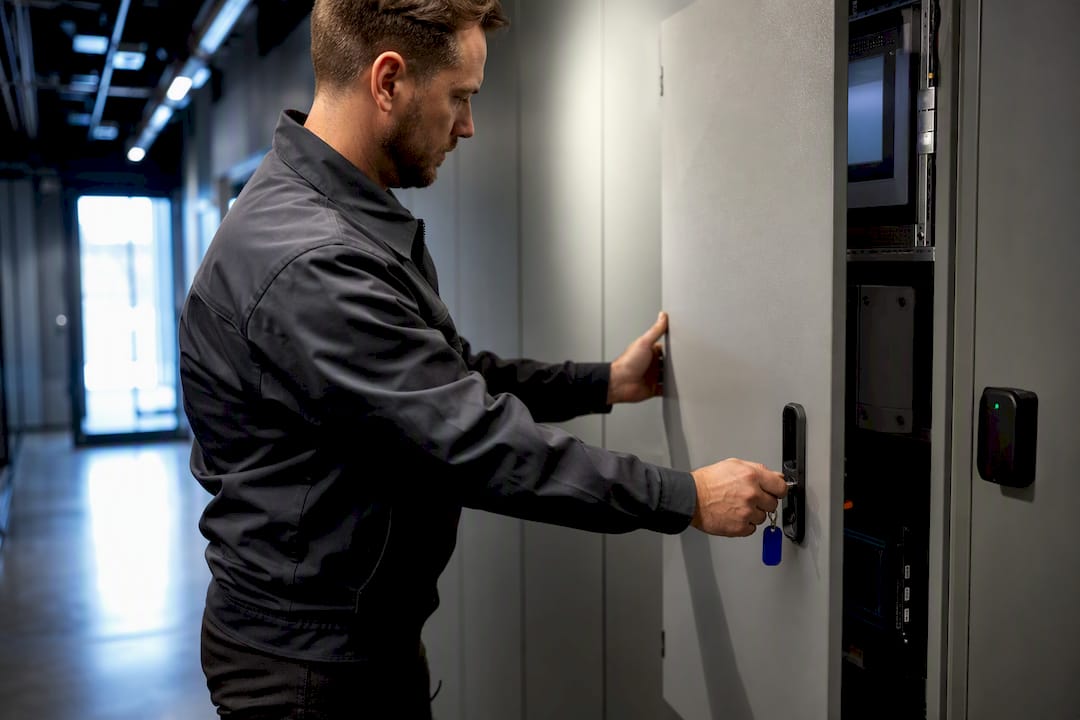
The integration piece matters as much as the individual controls. A badge access log should feed into the same monitoring process as your network logs, so a physical intrusion at 2 a.m. and an unusual login attempt on the same night get correlated instead of reviewed in isolation. USB port controls on engineering workstations close another common gap. Plenty of OT compromises have started with a contractor plugging in an infected USB drive, not a sophisticated remote exploit.
If your facility has never done a physical walkthrough specifically focused on OT equipment, that's a gap worth closing before investing further in network tools. Physical access to a PLC often bypasses every network control you've put in place.
What Regulations and Standards Apply to SCADA Security?
Regulatory pressure on SCADA security varies significantly by industry, and knowing which framework applies to you prevents wasted effort chasing the wrong compliance checklist.
NERC CIP (North American Electric Reliability Corporation Critical Infrastructure Protection) applies specifically to bulk electric system operators, utilities, and generation facilities. It's mandatory and enforceable with real penalties for entities that fall under its scope, covering everything from access control to incident reporting timelines.
IEC 62443 is a broader, sector-agnostic international standard for industrial automation and control system security. Unlike NERC CIP, it's not tied to a specific regulatory body with enforcement power in most contexts, but it has become the de facto reference for vendors, integrators, and asset owners across manufacturing, oil and gas, and other sectors without a dedicated regulator. Its structure around security levels and zones and conduits lines up closely with the defense-in-depth approach NIST SP 800-82 recommends.
For manufacturers working in FDA-regulated spaces, like pharmaceutical or food and beverage production, SCADA security intersects with existing quality and data integrity requirements, since manipulated process data can compromise product safety records as much as it can compromise a network. Aerospace suppliers often face contractual security requirements flowing down from prime contractors, which increasingly reference NIST frameworks directly.
The practical takeaway: don't assume you're exempt from all of this because you're not a utility. Check your contracts, your sector's regulator, and your customers' requirements before concluding no standard applies to you.
How Do Secure Communication Protocols Work in SCADA?
The protocols that move data around a SCADA network, Modbus, DNP3, and OPC among them, were built for reliability on closed, trusted networks decades before anyone worried about cyber intrusion. That legacy shows in a critical gap: most of these protocols transmit commands in plain text with no built-in authentication, meaning any device that can reach the network segment can potentially issue commands.
Newer, security-hardened variants address this directly. DNP3 Secure Authentication adds cryptographic authentication to command sequences, and OPC UA (unified architecture) was designed from the ground up with encryption and certificate-based authentication built in, unlike its predecessor OPC Classic. Where your equipment supports these secured variants, enabling them closes a real gap without requiring a hardware swap.
Where legacy protocols can't be upgraded, and plenty of installed equipment falls into that category, the security burden shifts to the network layer. Protocol-aware firewalls that can inspect Modbus or DNP3 traffic and block anomalous commands provide a compensating control. Encrypting communications at the network level, through a VPN tunnel or an encrypted WAN link between the control center and remote sites, protects data in transit even when the underlying protocol itself has no encryption. For a deeper technical breakdown of where encryption fits across an OT environment, see this guide to encryption in manufacturing.
How Should You Handle Secure Remote Access and VPNs?
Remote access is one of the most common entry points into SCADA environments, and it's also one of the easiest to get wrong. Vendors need to troubleshoot equipment remotely, engineers need to review system status from home during an on-call rotation, and every one of those connections is a potential doorway if it isn't controlled carefully.
Start with the assumption that no remote connection should reach the control network directly. Route all remote sessions through a jump host or bastion server sitting in the industrial DMZ, so the remote user's device never touches OT equipment directly, even if that device is compromised. Layer multi-factor authentication on top of every remote access account, including vendor accounts, since stolen or reused credentials remain one of the most common ways attackers gain initial access.
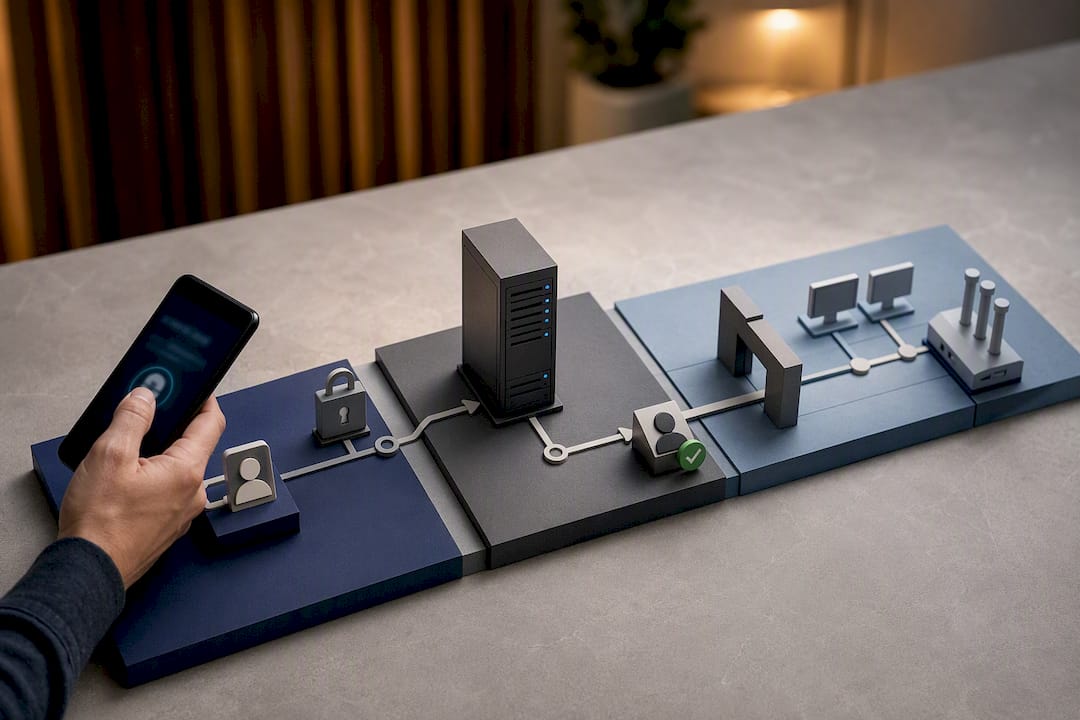
VPNs deserve specific attention because they're often treated as a security control on their own, when really they're just an encrypted tunnel; what happens on the other end of that tunnel still needs its own controls. Time-limit vendor VPN access so connections expire automatically rather than staying open indefinitely, and log every session so you have a record of who connected, when, and what they touched. Where possible, require that vendor access be requested and approved for a specific maintenance window rather than granted as a standing connection.
The goal isn't zero remote access. It's remote access that's monitored, time-bound, and never a direct bridge into your control network.
An Editorial Take: Getting the Basics Right Beats Chasing Perfection
Small manufacturers and regulated businesses tend to overestimate what "good enough" SCADA security requires. The temptation is to wait until there's budget for a comprehensive program, when the reality is that an asset inventory, basic segmentation, and unique credentials close most of the gaps that lead to real incidents.
What gets underestimated is how much OT and IT collaboration matters more than any single tool. A passive monitoring platform is only as useful as the baseline behavior someone took the time to document. A segmentation project only holds if operations and IT agree on the change control process before, not after, something breaks.
Measure progress in small, verifiable wins: one segmented VLAN, one retired default password, one tested patch process. None of that requires a large budget. It requires consistency, and a willingness to treat OT security as an ongoing operational discipline rather than a project with an end date.
— Michael
How Symmnet Helps Small Businesses Secure OT Environments
Building the layered defenses this article covers takes time most small manufacturing and aerospace teams don't have sitting around between production runs and customer deadlines. Symmnet exists to close that gap: a managed IT and cybersecurity partner that implements the actual controls, 24/7 monitoring, endpoint security, firewall management, network segmentation, and backup and recovery, rather than handing you a report and leaving you to figure out execution.

For manufacturers, aerospace suppliers, and regulated small businesses, Symmnet's managed IT services map directly to the checklist covered above: asset inventory support, OT-aware segmentation projects, compliance documentation for standards like NERC CIP or IEC 62443, and helpdesk support based in the United States when something needs a fast answer. Fixed monthly pricing means you know the cost of getting these controls in place before you commit, without the overhead of building an internal OT security team from scratch. If you want a clear picture of where your current environment stands against these fundamentals, request a free security assessment and get a specific, prioritized plan instead of a generic checklist.
Sources
- Guide to Operational Technology (OT) Security (NIST SP 800-82 r3)
- ICS Virtual Learning Portal | CISA
- ICS410: ICS/SCADA Security Essentials (SANS)